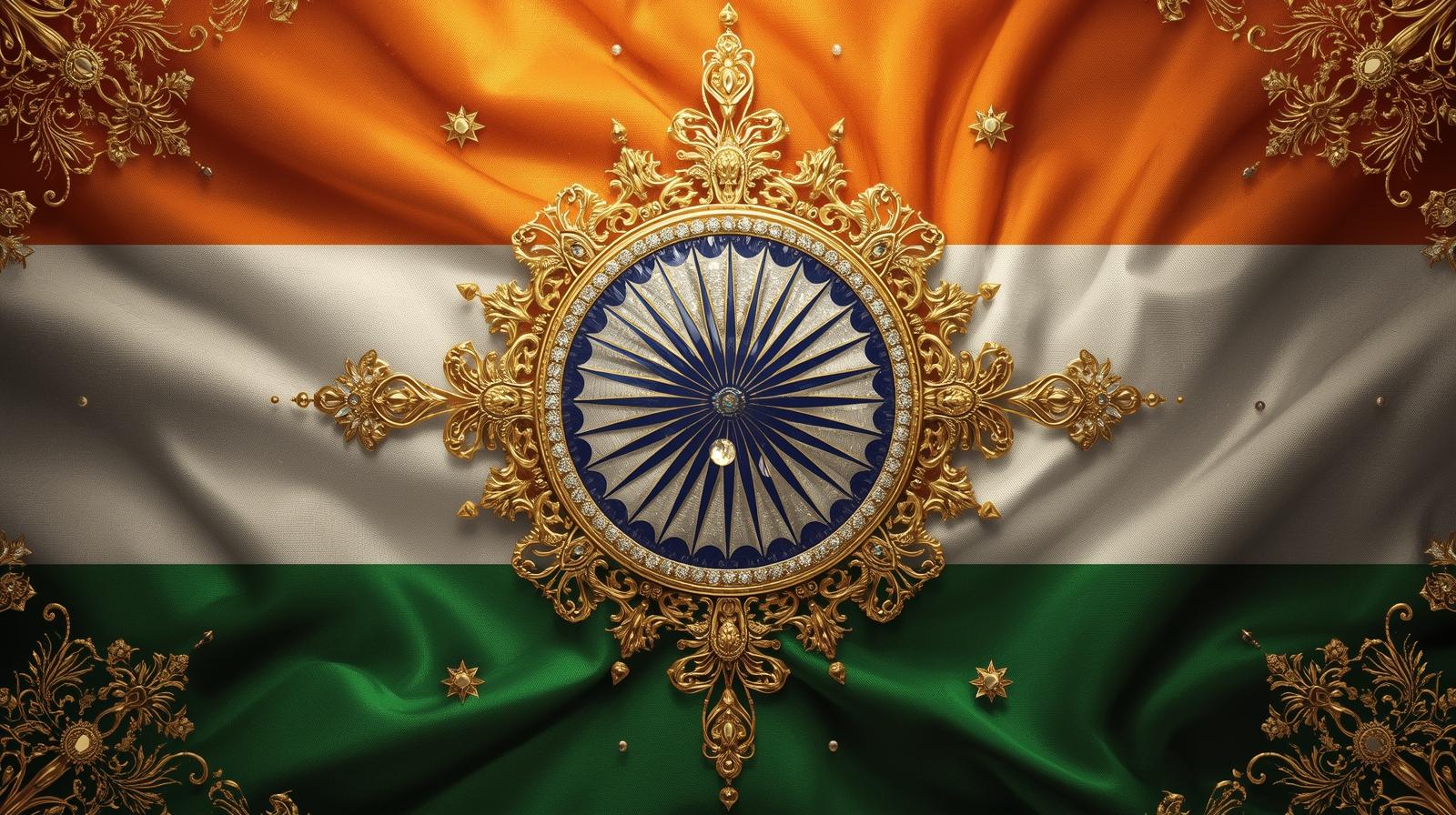
Velourha Journal · Nation & Craft Series
More Than Metal & Stone: Jewelry as a Civic Act in the Journey Toward Viksit Bharat 2047
On wearing your values, choosing your nation, and how the smallest personal decision is quietly building the largest national dream.
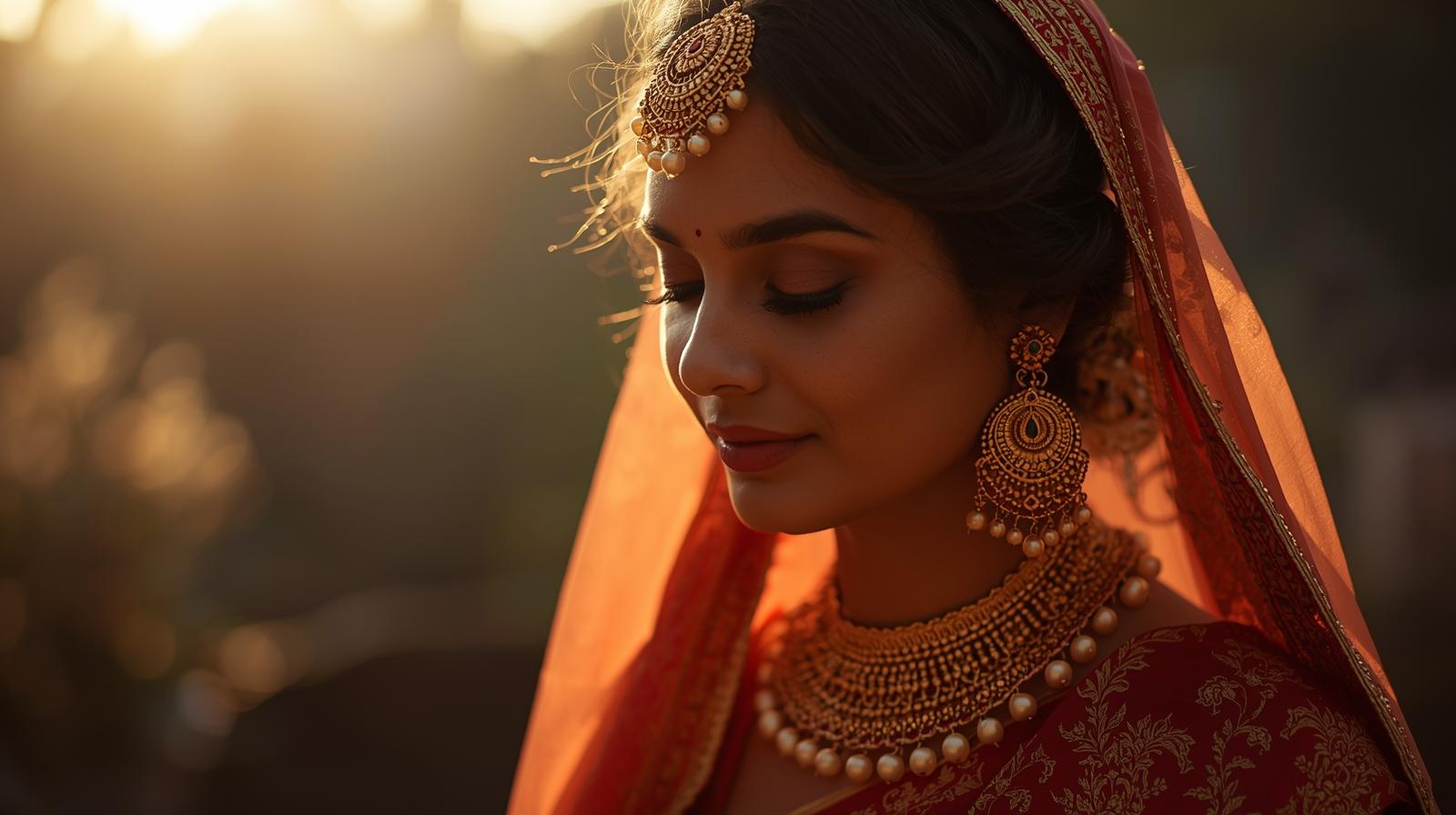
And yet, in that quiet gesture, something enormous is being carried forward. A tradition. An identity. A civilization. The work of countless artisan hands across centuries — their knowledge, their patience, their pride — is resting against her pulse.
This is what jewelry does in India. It does not merely decorate. It remembers. It connects. It speaks — in a language older than any written word — of who we are, where we come from, and where, together, we are going.
At Velourha, we have been thinking deeply about this language. About the responsibility that comes with making something that people wear so close to their skin, so close to their hearts. And increasingly, we have been thinking about what it means to make jewelry in India, for India, at this particular and extraordinary moment in our history.
Because right now, India is not just a country going through development. India is a civilization waking up. And every single one of us — whether we run a business, raise a family, teach a classroom, or simply choose what to wear in the morning — has a role in what it wakes up into.
“Civic responsibility is not a speech or a vote or a grand gesture. It is the daily practice of choosing your nation. It is the quiet decision, made again and again, to invest your faith in the place you call home.”
— Velourha(Viksit Bharat 2047)
The Weight of 2047
Understanding what India is building — and why it matters to all of us
In the year 2047, India will celebrate 100 years of independence. That centenary is not just a calendar milestone. For this generation of Indians — for us — it is a moral invitation. What kind of India will we hand over to the generation that comes after us?
Viksit Bharat 2047 is the government’s formal vision: a fully developed India with world-class infrastructure, a thriving economy, zero poverty, universal education, and a quality of life that matches the ambition of our people. These are powerful, necessary goals. And they require policy. Investment. Governance. Planning.
But there is another dimension to Viksit Bharat that no government alone can build. It lives in the culture of a people. In their self-belief. In their relationship with their own heritage. In whether they trust, support, and invest in each other. In whether they see their daily choices — consumer, civic, creative — as meaningful or meaningless.
A developed nation is not merely an economy. It is a civilization that knows its own worth. And right now, building that knowing — that quiet, bone-deep confidence in what India is and what India can be — is perhaps the most urgent work of all.
This is the Viksit Bharat that Velourha is committed to. Not because we are a political brand. But because we are an Indian brand. And we believe that every Indian, in every field and every walk of life, carries a piece of this responsibility.
Viksit Bharat 2047
What Civic Responsibility Really Means
Beyond voting booths and slogans — the everyday citizenship nobody talks about
When we hear the phrase “civic responsibility,” we often think of large public acts. Voting. Paying taxes. Following traffic rules. These things matter enormously. But the civic responsibility that truly shapes a nation runs deeper — and quieter — than any of these.
It lives in the question: who do I choose to support? Whose skills do I value? Whose labor do I reward? What kind of economy am I participating in, and what kind am I building?
Every rupee is a vote. Every purchase is a policy. Every time we choose to buy from an Indian artisan over a mass-produced import, we are not just making a transaction — we are making a statement about what we believe India is capable of.
Civic responsibility also lives in how we carry our culture. In whether we treat our traditions as burdens to be shed or as living roots that nourish us even as we grow. In whether we tell our children that Indian design is beautiful, or whether we quietly teach them that the best things come from elsewhere.
It lives in our pride. Or our shame. And the difference between those two things, compounded across a billion people over decades, is the difference between a nation that rises and a nation that continues to look elsewhere for its reflection. Viksit Bharat 2047
India’s Hands: The Artisans Building Viksit Bharat
The story of a nation is always the story of its makers Viksit Bharat 2047
Somewhere in a narrow lane in Jaipur, a man bends over a piece of silver in the early morning. His hands move with a certainty that comes not from confidence alone but from lineage — his father worked this same metal, and his father’s father before that. The technique he is using has a name that is centuries old. The piece he is making today will be worn at a wedding, passed down, loved.
Somewhere in Andhra Pradesh, a woman sits at a loom, her fingers moving between threads with the speed of long practice. The pattern she is weaving exists nowhere else in the world. It was created by her community, refined over generations, encoded with a meaning that only those who know its history can fully read.
These hands — seven million artisans across India, in craft clusters from Kutch to Kanchipuram — are carrying a knowledge that cannot be replaced once it is lost. They are not museum pieces. They are not relics. They are living, breathing innovators working at the intersection of the ancient and the contemporary.
But they are also vulnerable. When we choose convenience over craft. When we value cheapness over quality. When we assume that something imported must be superior to something made here — we are not just making a purchase decision. We are making a cultural decision. And the consequences are felt in those hands.
Viksit Bharat 2047 needs these hands. It needs them valued, employed, celebrated, and supported. It needs a generation of Indians who understand that choosing Indian craftsmanship is not a sacrifice — it is a privilege. It is access to something the world is beginning to desperately seek: objects made with meaning, by human hands, with knowledge that took centuries to develop.
We work with craftspeople whose families have been making jewelry for five, six, sometimes seven generations. When we sit with them, we are not just commissioning a product. We are entering a conversation that began long before we were born. That conversation is one of the most precious things India possesses. We do not take the privilege of participating in it lightly.
Viksit Bharat 2047
Velourha’s Commitment: Where Jewelry Meets Nation
What it means to build a brand in the spirit of Viksit Bharat
Velourha was not built as a civic project. It was built because we love jewelry — its beauty, its intimacy, the way it carries memory and meaning in a way that no other object quite does. But love, when it is genuine, becomes responsible. And as our love for jewelry deepened, so did our understanding of what it means to make jewelry in India today.
It means choosing collaborations that honor craftspeople rather than exploit them. It means designing with intention — drawing from the deep well of Indian aesthetic tradition while speaking to a contemporary woman who is global in her thinking but rooted in her identity. It means being transparent about where things come from and who made them. It means building a business that is part of India’s story, not apart from it.
I
II
III
Viksit Bharat 2047
We also believe that the woman who wears Velourha is herself a civic actor. She is educated, intentional, and deeply aware that the choices she makes — from the food she buys to the jewelry she wears — ripple outward. She is not interested in passive consumption. She wants her choices to mean something. She wants to wear her values as openly as she wears her jewelry.
To her, choosing an Indian brand is not a compromise. It is an assertion. It is her saying — quietly, beautifully, every day — that India is enough. That India is, in fact, extraordinary.
The Nation We Are Each Building (Viksit Bharat 2047)
A letter to every Indian who has ever felt the weight of where we come from and the pull of where we are going (Viksit Bharat 2047)
There is something particular about being Indian at this moment in history. We carry a past of such depth — such achievement, such suffering, such extraordinary creativity — that it sometimes feels like a weight rather than a gift. The colonial interruption was not just economic. It was psychological. It taught generations of Indians to look outward for validation, to measure themselves against a foreign standard, to believe that what was made here was somehow lesser.
Healing that wound is part of what Viksit Bharat means. Not through anger or nationalism’s darker impulses — but through the quiet, daily practice of choosing to believe in what India makes. In its craftsmanship. Its design intelligence. Its capacity for world-class excellence in fields both ancient and modern.
When a young woman in Mumbai chooses Indian jewelry designed by Indian hands over a foreign luxury brand, she is doing something quietly radical. She is saying: I do not need external validation. I carry my own standard of beauty. I know where I come from, and I am proud of it.
When a family in Chennai invests in a local artisan’s work rather than a mass-produced import, they are teaching their children something that no classroom can fully convey: that Indian hands make things worth keeping.
These are not small acts. In a country of 1.4 billion people, every small act is a large act. Every individual choice, multiplied across a generation, becomes the culture of a nation. And the culture of a nation, more than any infrastructure or policy, determines what kind of future it builds.
“A nation’s greatness is not built in parliament alone. It is built in homes, in workshops, in the quiet choices of ordinary people who decide, again and again, that their country is worth believing in.”
— Velourha, Civic Pride Series
Viksit Bharat 2047
What You Can Do — Starting Today
Civic responsibility is not an event. It is a practice.Viksit Bharat 2047
We are not asking for grand gestures. Grand gestures belong in speeches. What builds nations is the accumulation of small, consistent, intentional choices made by people who care. Here is what that looks like, in the most ordinary and beautiful terms:
Choose Indian craft with awareness. The next time you buy jewelry, textiles, home goods, or any handmade product — pause. Ask where it was made. By whom. With what tradition. Then choose the thing that carries a story worth keeping. Not out of obligation, but out of genuine appreciation for what India’s makers have preserved.
Tell the story when you wear it. When someone compliments your jewelry, tell them who made it. Tell them about the tradition it comes from. You are not just sharing a fashion choice — you are passing cultural knowledge forward. Every conversation is a small act of preservation.Viksit Bharat 2047
Teach the next generation to look at Indian design with pride. Children inherit their aesthetics from the adults around them. If they see the adults in their lives choosing Indian craft, valuing Indian beauty, speaking with pride about Indian artisans — they will grow up with a very different relationship to their own heritage than the generation that came before.
Support businesses that are building India honestly. Not every brand that uses the word “Indian” is building India. Look for brands that work with artisans fairly, that are transparent about their processes, that are genuinely trying to build something rooted in the country’s cultural wealth. Support them not just with purchases, but with your voice and your attention.
Wear your pride without apology. This may be the simplest and most powerful thing of all. In a world that still sometimes looks at India with a patronizing gaze, the most radical act is to wear what you love — Indian jewelry, Indian clothes, Indian design — with the full, uncomplicated confidence of someone who knows exactly how magnificent their heritage is.
2047: The India We Are Making Together(Viksit Bharat 20470)
Twenty-one years from now, India will stand at its centenary. The roads and the railways will have been built by engineers and laborers. The institutions will have been shaped by lawmakers and administrators. The economy will have been grown by entrepreneurs and workers.
But the soul of that India — the confident, beautiful, deeply rooted soul of a civilization reclaiming its rightful place in the world — will have been built by all of us. By every artisan who kept their craft alive through the lean years. By every woman who chose to wear her heritage proudly. By every family that passed down a piece of jewelry with its story still intact. By every brand that chose integrity over shortcuts. By every customer who chose meaning over mere convenience.
Velourha is a small part of this larger story. We do not overstate our role. But we are clear about our commitment: to make beautiful things, with honest hands, in the service of a country we love deeply. To be one small thread in the vast, intricate fabric that India is weaving for itself.
And we believe that you — the person reading these words, wherever you are — are also a thread in that fabric. More important than you may realize. More powerful than you may feel on an ordinary morning. The India of 2047 is not waiting to be handed down from above. It is being made, right now, by people like you and us, in the choices we make every single day.
Wear it. Own it. Build it.
Viksit Bharat 2047
Viksit Bharat 2047
Velourha · Jewelry with Civic Soul
We make jewelry for women who know that what they wear carries meaning.
For the India that is remembering its worth — and rising into it.
#VelourhaForViksitBharat · #WearYourNation · #CivicPride . #Viksit Bharat 2047

Leave A Comment